Sunday, Sept 27th2026-(Concert starts at 4.00 PM sharp) at
Dr. Bhagat's Residence 6675 Minnow Pond Dr. West Bloomfield, MI 48322
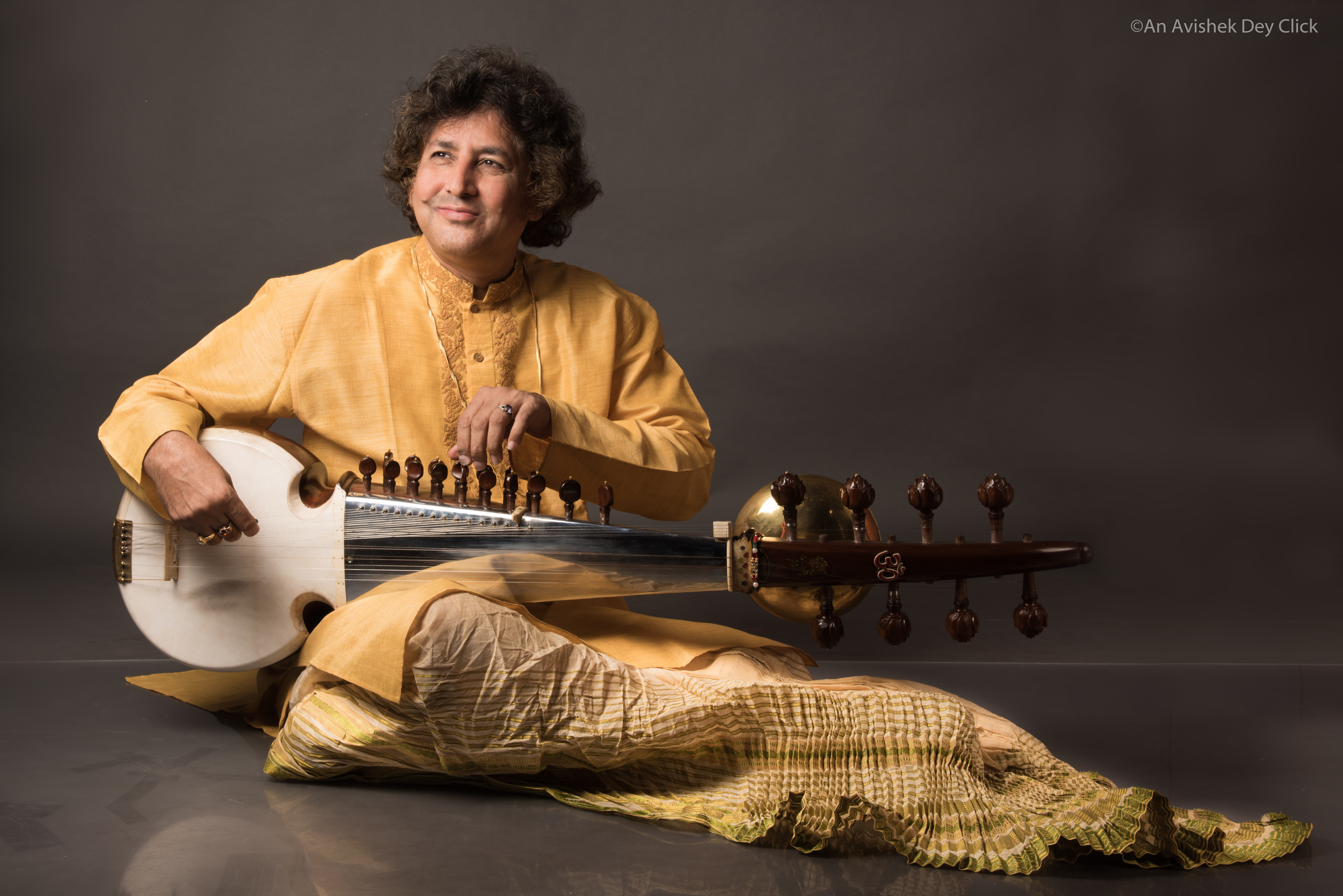
Partho Sarothy
Partho Sarothy is one of the finest musicians of our country. His music embodies the true heritage of Hindustani raagdari music. His virtuosity on the sarod makes his exploration of raagas an exercise in harmony and tranquility, while his serious, meditative approach allows his music to soar to unparalleled heights of fulfillment.
Partho began his musical training under his father, the late Sudhamoy Chowdhury, who was a disciple of Pandit Radhika Mohan Moitra, the great sarod maestro. He then trained for nearly a decade under Ustad Dhyanesh Khan, son and disciple of the legendary sarod virtuoso Ustad Ali Akbar Khan. Since 1980, Partho has been under the direct guidance of Bharat Ratna Pandit Ravi Shankar, India's greatest musician.
With this long and illustrious training under these legendary gurus, coupled with an inherent and versatile creative sensibility, Partho Sarothy's music is truly a symphony of serenity.
Born in 1960, Partho is based in Kolkata (formerly Calcutta), the cultural capital of India. He has been performing for over 40 years in India and around the world as a soloist, as well as accompanying his revered guru, Pandit Ravi Shankar. Together they have performed at prestigious venues including the Royal Albert Hall and the Royal Festival Hall (formerly Royal Elizabeth Hall) in London, the Kremlin in Moscow, Carnegie Hall in New York, and numerous other renowned venues across India and abroad.
In India, he has performed at all the major classical music festivals, including the Dover Lane Music Conference and the S.R.A. Festival in Kolkata, the Sawai Gandharva Festival in Pune, the IMG Festival in Mumbai, the Shankarlal Music Festival and Vishnu Digambar Jayanti in Delhi, the Ustad Allauddin Khan Sangeet Samaroh in Maihar (Madhya Pradesh), the Tansen Sangeet Samaroh in Gwalior, and many other prestigious music festivals throughout the country.
Web: Partho Sarathy
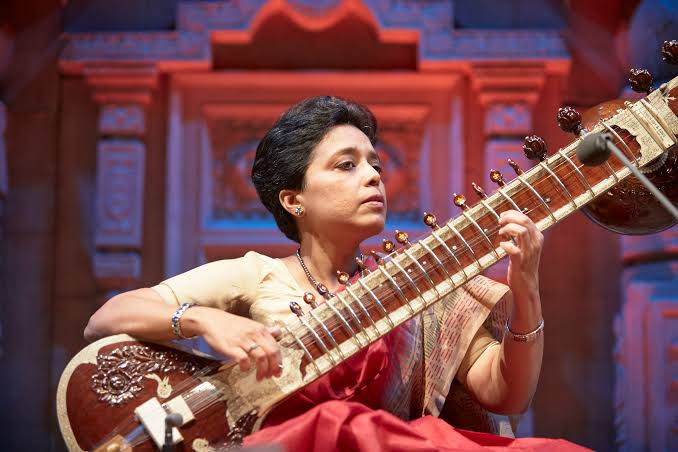
Mita Nag
Mita Nag, daughter of veteran satirist, Pandit Manilal Nag and granddaughter of Sangeet Acharya (a master musician) Gokul Nag, belongs to the Vishnupur Gharana of Bengal, a school of music nearly 300 years old. In terms of lineage, Mita is the sixth generation sitar player in her family, the tradition having begun with her fore fathers. It was with her grandfather Gokul Nag, who had become the Guru of a noted zamindar (feudal lord) family of Uttarpara, a Northern suburb town of Kolkata, that the music of the Nag family came into limelight.
With her illustrious father Manilal, the sitar tradition of Vishnupur gharana was made known to the world. Mita was initiated into music at the tender age of four . She had shown rather early gestures of her love for music. Toddling with her tiny sitar Mita began her early training under the guidance of her mother who was also a disciple of Gokul Nag. Her grandfather’s encouragement and instructions through singing had much influence on her early reception of music, most noticeably, associating the instrument with song. Her tutelage under her father started at the age of six.
Mita appeared for her debut performance at the age of ten years, the year 1979 being observed as the International Year of the Child. The same year Mita won the Junior National Talent Search Award of the Govt .of India. Mita has performed in a number of concerts, solo as well as duet recitals with her father in major cities of India and in many cities of the US, Canada, Japan and Europe. She was awarded the Junior Fellowship Award by the Human Resource Development, Govt of India, for her research project on Vishnupur Gharana. Mita has founded the Gokul Nag Memorial Foundation, a Trust for the promotion of Indian Classical Music, in the fond memory of her grandfather. Mita is a Masters in English Literature and an M.Phil. in English from The University of Kolkata.
Web: Mita Nag
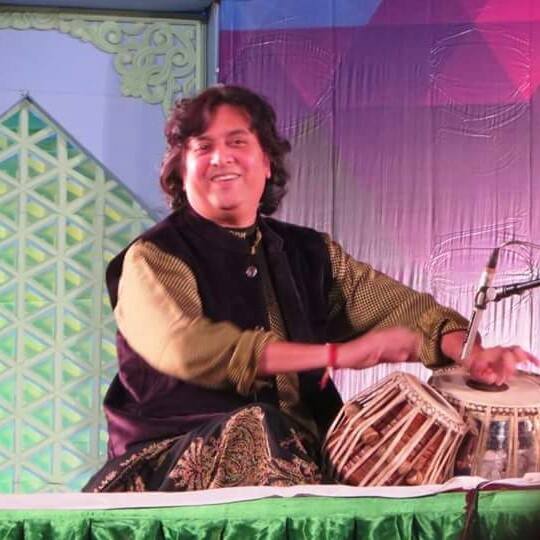
Subhen Chatterjee
Subhen Chatterjee will accompany on Tabla. Subhen Chatterjee bases his style of playing to Lucknow Gharana that he learnt from his illustrious Guru tabla maestro Pandit Swapan Chowdhury. Not restricting himself to one single Gharana-Subhen went on to learn the intricacies & beauty of other Gharanas that he introduced in his playing & which has made his style of playing so unique & distinctive.
Subhen has also created India’s leading fusion band, KARMA, which is still the only of its kind from the eastern part of India. Subhen’s recent collaboration with renowned percussionist, SIVAMANI, has enabled him to form another unique fusion band called FRIENDS OF DRUMS whose main objective is to help the lesser known yet very talented musicians sharing stage with renowned ones.
His album BANDISH FUSION was nominated for JPF Music Awards (one of the USA’s leading music awards) in 2006. Subhen’s latest albums BANDISH FUSION: REDEFINED and BANDISH FUSION: THE LASTING LEGACY are already in the charts; both in India and abroad.
Web: Subhen Chatterjee